Since 2020, our team focusing on eXtended Reality (XR) at Deloitte Digital Belgium has been exploring the edges of immersive technology: experimenting, prototyping, and learning our way through a rapidly evolving landscape. With approximately 20% of our time dedicated to Research & Development, we’ve built a rich body of work that spans both client-driven projects and internal Proofs of Concept (PoC), reflecting not only technological progress but also the team’s growing intuition about what meaningful, human-centered XR can be.
This article is part of a chronological series that retraces the hidden side of that R&D journey: each article highlights one POC: the context in which it was created, the technology choices behind it, the challenges we faced, and the insights that shaped our next steps. Together, these stories reveal how experimentation fuels capability building.
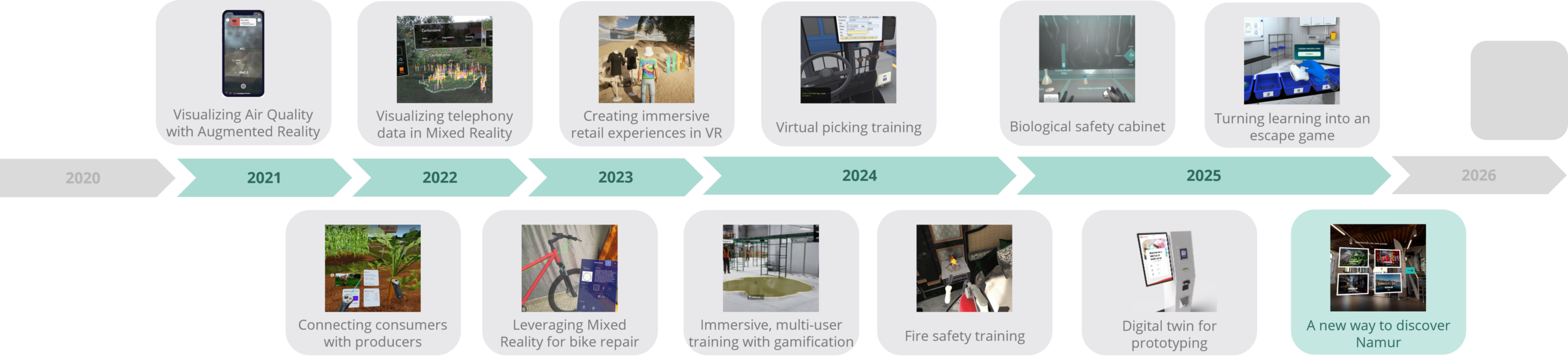
Next projects to be revealed soon…
Making tour operators curious about Namur
How do you make a city stand out when every destination is competing for attention?
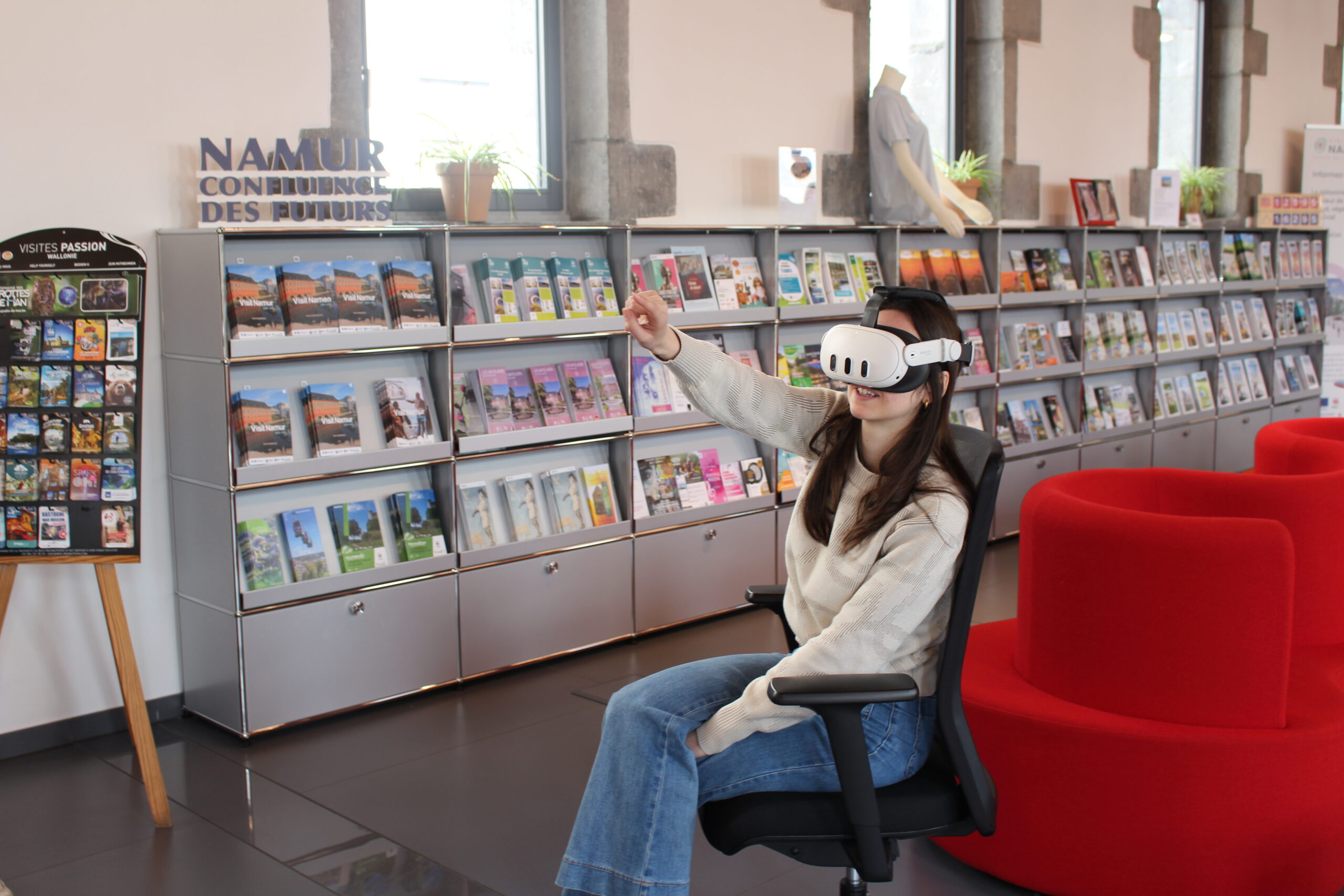
That was one of the challenges behind Visit Namur Experience. The experience needed to help the Namur tourism office differentiate itself at tourism fairs, while also being relevant within the tourist office itself.
The ambition went beyond presenting a selection of attractions. We wanted visitors to discover Namur in a different way, giving them a glimpse of what the city has to offer through an immersive experience designed to spark curiosity, create engagement, and ultimately encourage them to experience the city for themselves.
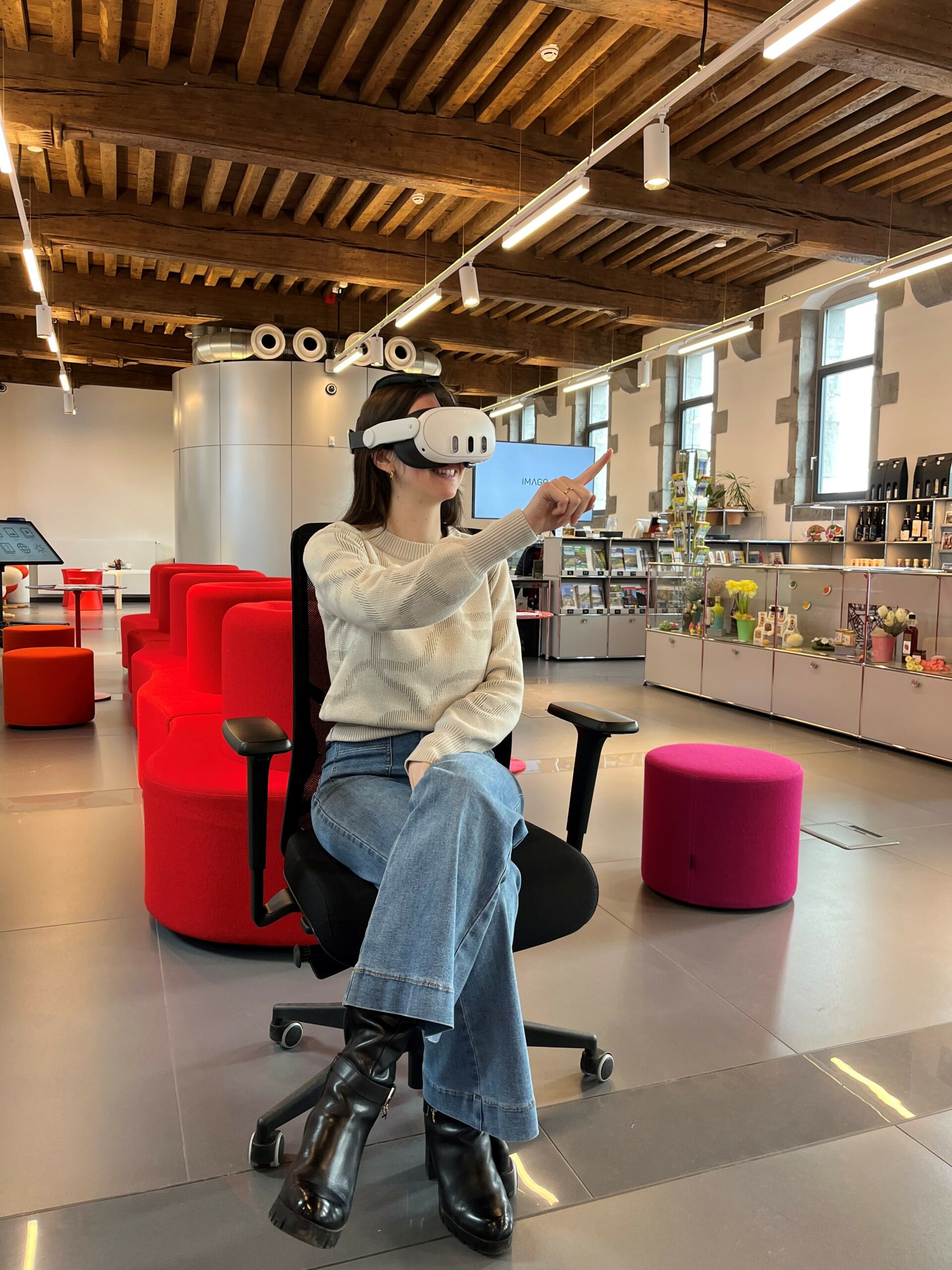
The result was an immersive storytelling experience in mixed reality, combining a multilingual narrator, 360° footage, and interactive 3D elements.
But rather than recreating the traditional guided-tour format in XR, we wanted the experience to feel personal and open to exploration.
Discovering the city through a local perspective
A city is more than a collection of landmarks. The way someone introduces you to it can completely change how you experience it.
That idea shaped the storytelling of Visit Namur Experience.
Instead of relying on a conventional tour guide, the experience is narrated by a stilt walker, a cultural symbol of Namur. He takes on the role of a local introducing users to his native city and guiding them towards some of the places he likes most.
This gave the experience a narrative perspective: users weren’t simply being shown points of interest. They were being introduced to Namur through a character rooted in the city’s own identity.
At the same time, we didn’t want the guide to dictate the entire journey.
Giving the user the freedom to explore
One of the central service-design choices was freedom.
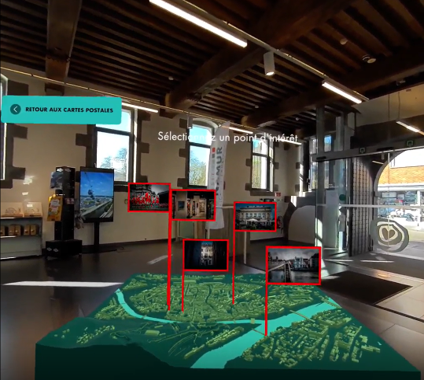
Instead of forcing everyone through the same predetermined sequence, users could explore a map of Namur and decide which point of interest they wanted to discover next.
This changed the experience from a linear presentation into something closer to exploration. The stilt walker provided the narrative thread, but the user remained in control of the journey.
Once a destination was selected, 360° footage helped bring users into the real environment, while storytelling and interactive elements provided another way to discover the location. The experience supported navigation between different attractions and allowed users to return to previous content. It was also available in French, Dutch, and English.
That combination of guidance and autonomy became central to the experience: enough storytelling to create a coherent journey, but enough freedom for each visitor to follow their own curiosity.
From showing a destination to creating the desire to explore it
Looking back, Visit Namur Experience wasn’t about virtually reproducing the city. It was about creating a first encounter with it.
The immersive experience provided a glimpse of what Namur has to offer while leaving space for people to discover the rest themselves. The reported overall satisfaction score of 4.7 out of 5 provides one indication of how the experience was received.
Ultimately, Visit Namur Experience reinforced a principle that goes beyond this project: immersive technology doesn’t need to replace the real experience. It can create the curiosity that makes people want to experience it for themselves.
Lilli Bouché
XR Experience Designer