Since 2020, our team focussing on eXtended Reality (XR) at Deloitte Digital Belgium has been exploring the edges of immersive technology: experimenting, prototyping, and learning our way through a rapidly evolving landscape. With approximately 20% of our time dedicated to Research & Development, we’ve built a rich body of work that spans both client-driven projects and internal Proofs of Concept (PoC), reflecting not only technological progress but also the team’s growing intuition about what meaningful, human-centered XR can be.
This article is part of a chronological series that retraces the hidden side of that R&D journey: each article highlights one POC: the context in which it was created, the technology choices behind it, the challenges we faced, and the insights that shaped our next steps. Together, these stories reveal how experimentation fuels capability building.
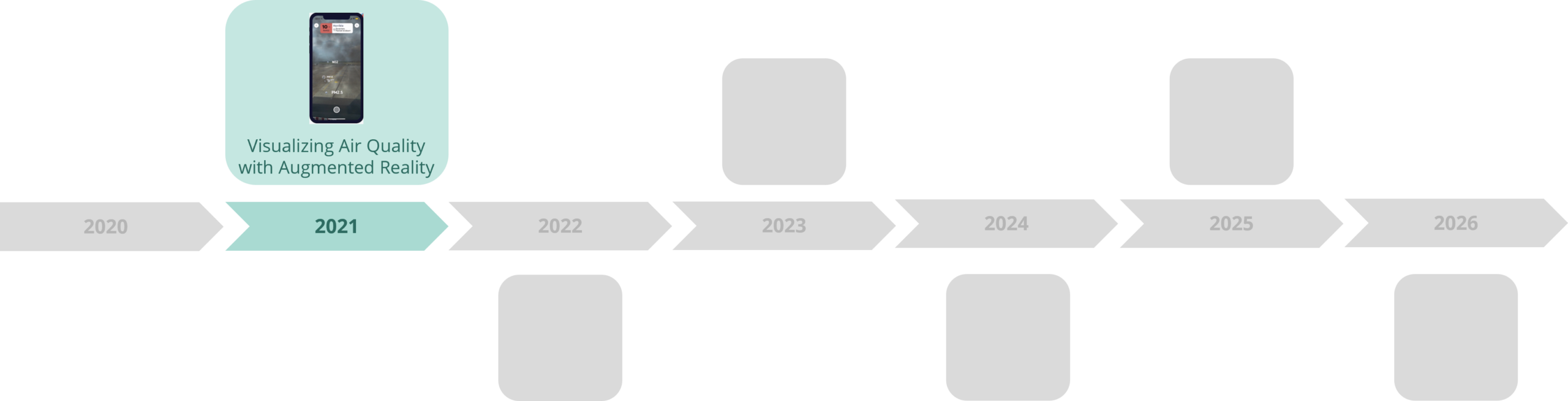
Next projects to be revealed soon…
Making the invisible visible
In 2021, we faced a simple challenge: How do you make people care about something they can’t see?
Air pollution is invisible. We breathe it every day, yet we have no intuitive sense of its presence or severity. Our partner, a mobility-focused team launching an environmental awareness campaign, needed a way to make air quality tangible. Numbers alone wouldn’t work. Maps wouldn’t work. They needed something that would make people feel the problem.
So we built an augmented reality application that transformed invisible data into visible experience.
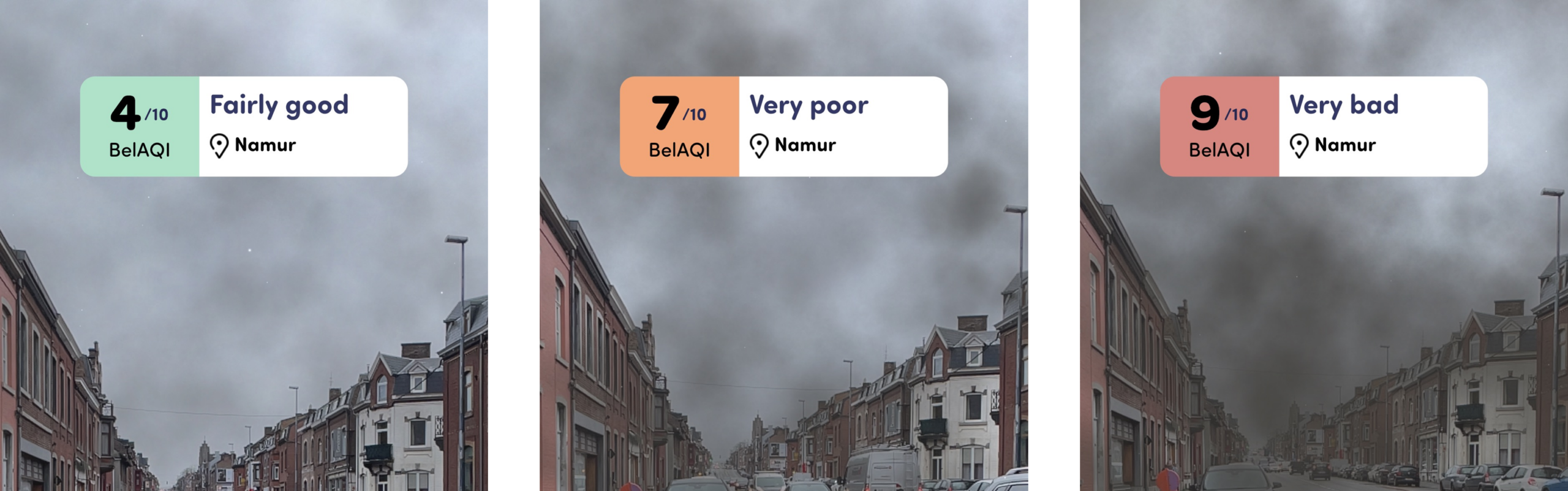
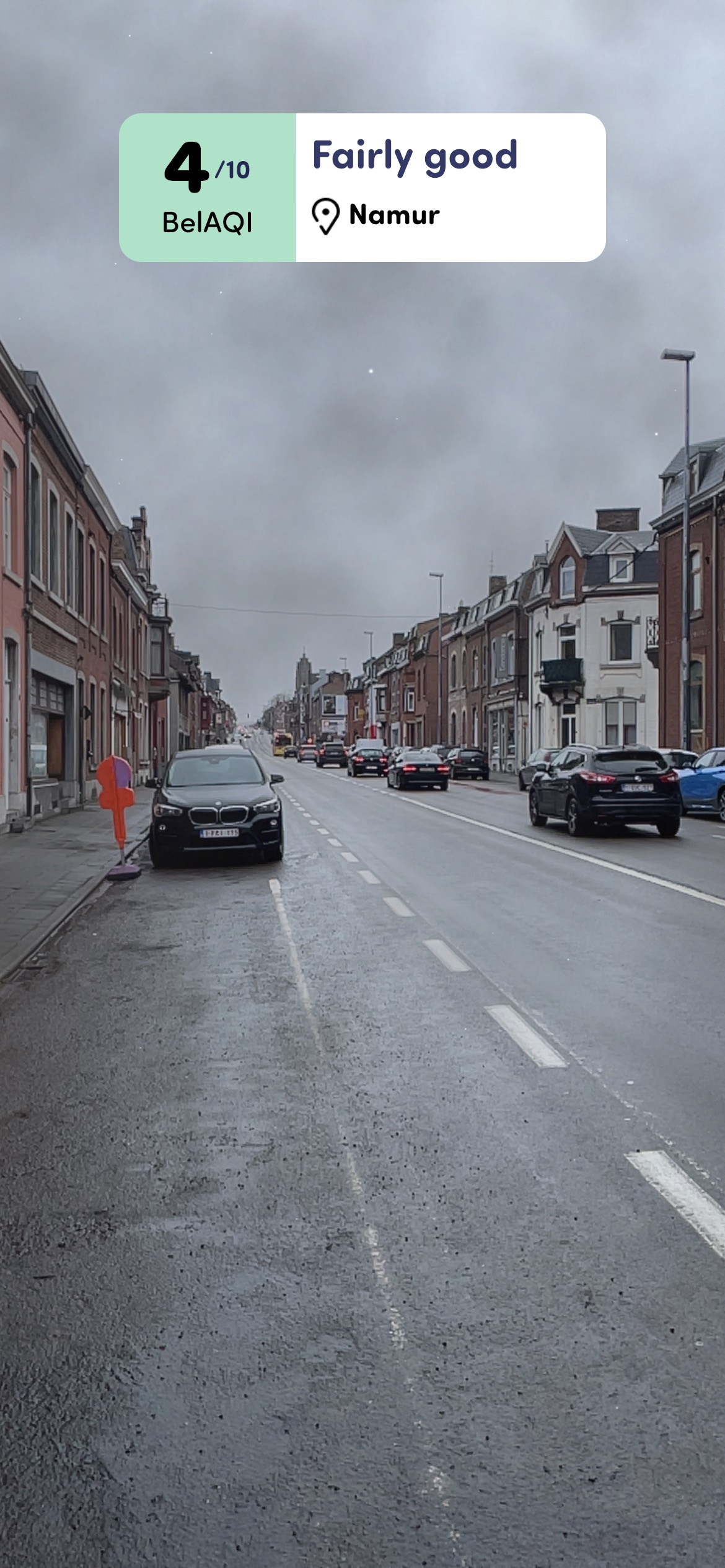
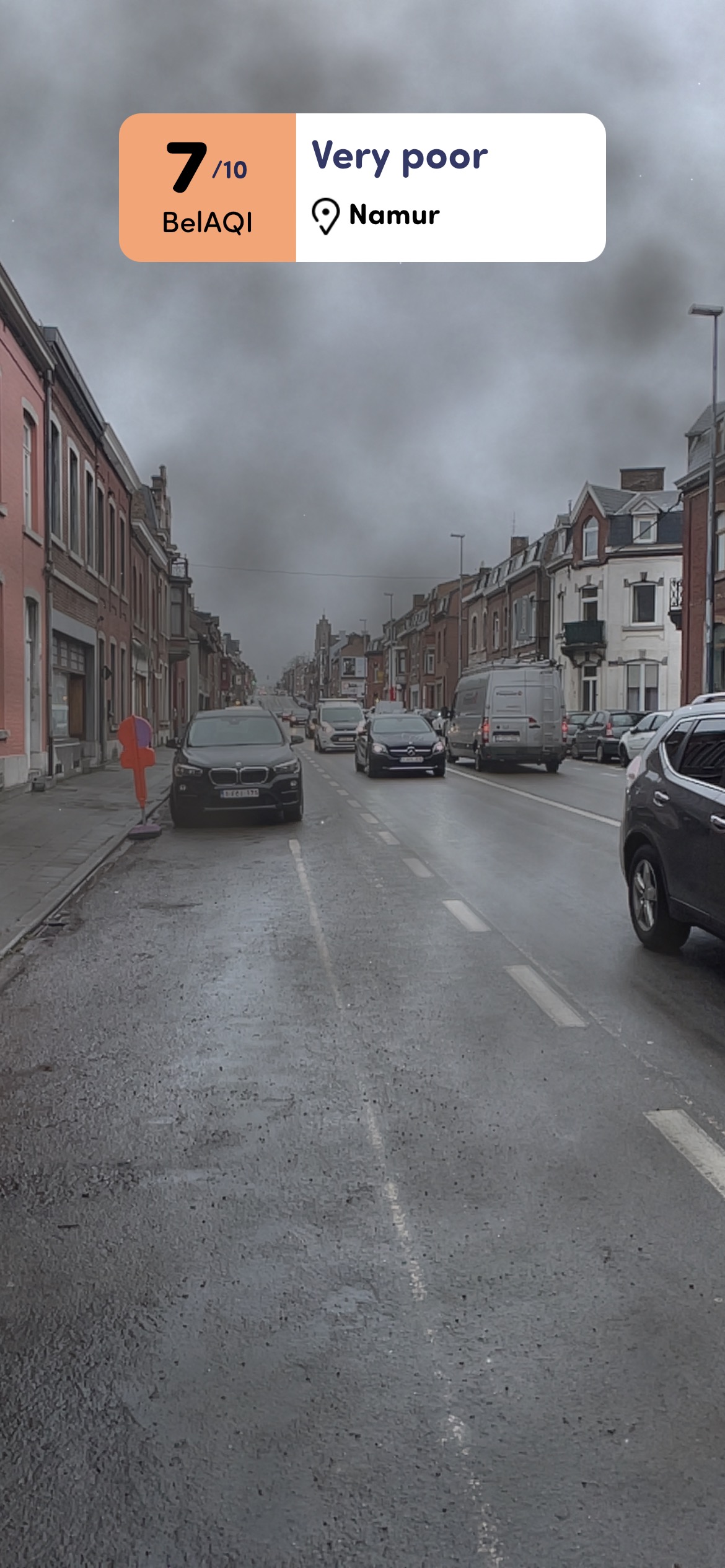
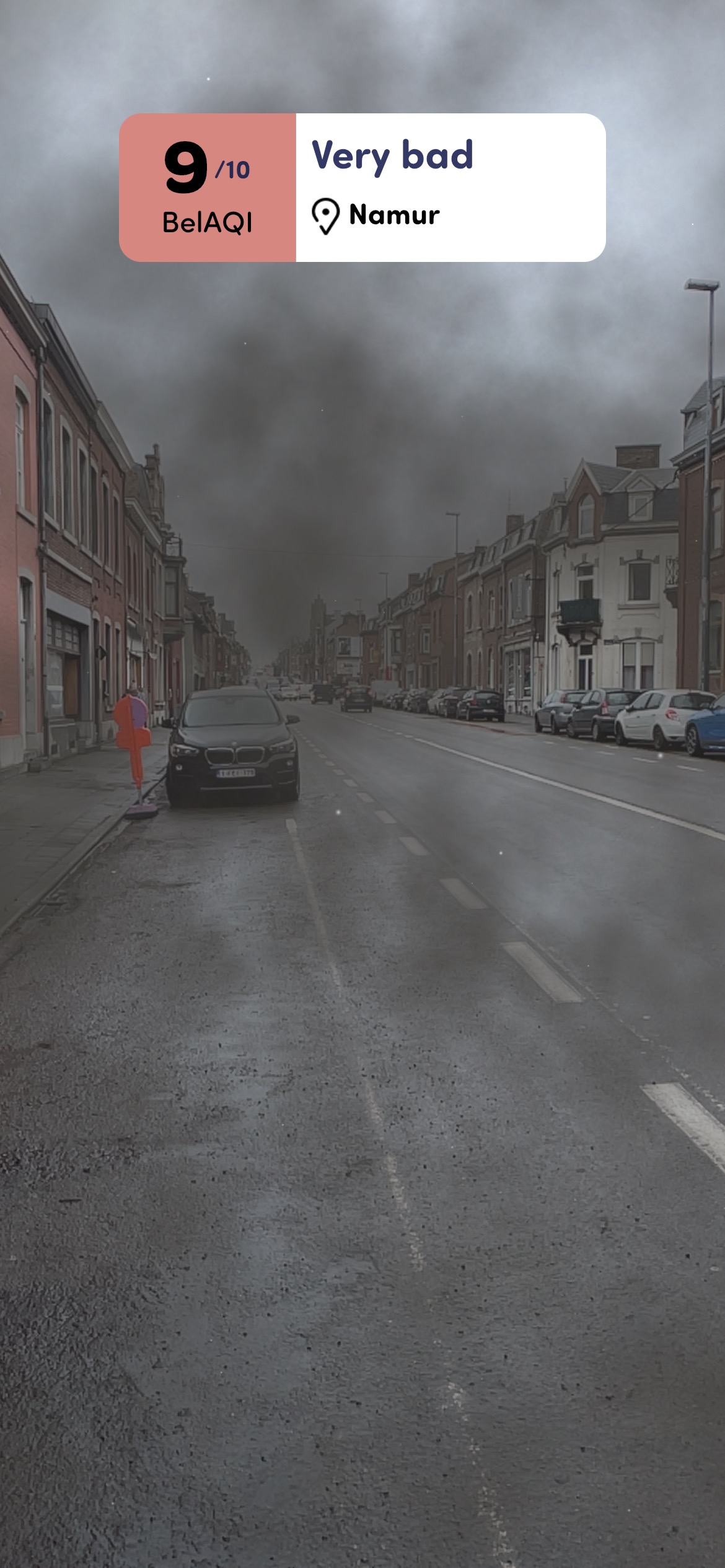
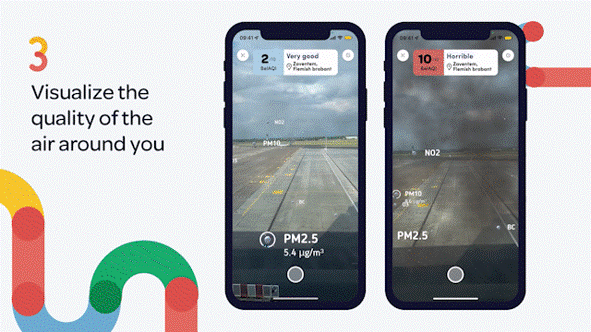
Imagine opening an app on your smartphone and switching to “vision around” mode. Your camera feed appears on screen, showing your immediate surroundings in real time. Overlaid on top of the live video are dynamic 3D effects: wisps of smoke and floating particles that swirl around you. When air quality is good, you see almost nothing. When it’s poor, dense clouds of particles fill your view.
The app also displayed numerical data, NO2 percentages and particle concentration metrics, but the visuals did the real work. They made pollution comprehensible in a way that numbers alone never could. The AR mode was the differentiator. It transformed abstract data into something immediate and spatial.
In 2022, we had solid experience with React Native and mobile development. But this project was new territory: integrating specialized immersive technologies into broader application ecosystems. We were about to learn something that would shape our approach for years to come.
Alongside this AR app, we were building Holocity; a Mixed Reality (MR) app using the HoloLens headset. This choice allowed to create interaction and the visualization of a 3D map of Namur with clouds representing air pollution floating above the city. Interested in learning more about this project ? Read it here
The architecture
Here’s where most teams would have made a different choice. We could have built everything in Unity. It’s powerful, flexible, and designed for immersive experiences. But Unity has a weakness: building responsive, polished 2D user interfaces is cumbersome compared to native frameworks.
We could have built everything in React Native. It excels at responsive interfaces and cross-platform compatibility. But React Native isn’t designed for 3D rendering and particle effects.
So we made a deliberate choice: use both. React Native would handle the application shell, navigation, and user interface. Unity would be embedded as a specialized component for 3D visualization. Each framework would do what it does best.
One team member focused on the 3D and environmental aspects: rendering the smoke and particle effects, capturing the camera feed, and overlaying the 3D visualizations on the live video stream. Another specialist handled everything else: the broader application, data retrieval from air quality APIs, and UI management. The real-time air quality data came from multiple monitoring stations distributed across Belgium. The React Native layer fetched this data and passed the metrics to Unity, which translated them into visual intensity. Good air quality meant minimal effects. Poor air quality meant dense particle clouds.
It sounds complicated. It should have been complicated. What surprised us most was how smoothly this integration worked. We expected friction: coordinating between two different frameworks, managing data flow, ensuring the 3D layer played nicely with the native UI. These are the kinds of problems that derail projects. Instead, the integration proved elegant and efficient.
This positive experience became a valuable lesson: hybrid architectural approaches, when thoughtfully designed, can be more powerful than forcing everything into a single tool. We didn’t just solve a technical problem; we discovered a pattern we’d apply to future projects.
The technical challenges were minimal. Augmented reality technology was already mature by 2022. Tools for phone orientation tracking and camera access were well-established. The real constraint was architectural: building responsive 2D interfaces within Unity is more difficult than in native frameworks. By delegating UI to React Native, we sidestepped this limitation entirely. This taught us something important: the best technical decision isn’t always about using the most powerful tool. It’s about using the right tool for each job.
Impact & evolution
This project showed us something fundamental about our team’s approach: we don’t chase technology for its own sake. We ask what problem we’re solving and choose tools accordingly. The hybrid architecture became a template for future work. It showed that specialization and collaboration, pairing a 3D expert with a mobile development expert—could produce results greater than either could achieve alone.
The project also positioned us at the intersection of immersive technology and social impact. We weren’t building entertainment or industrial training. We were building awareness. That distinction mattered. It influenced how we approached every project that came after.
Four years is a long time in immersive technology. If we were to rebuild this application today in 2026, several things would change. We could port this experience to emerging augmented reality glasses and headsets entering the market. A hands-free, glasses-based visualization of air pollution would be more immersive and accessible than a smartphone-held experience. Unity has evolved significantly, offering superior visual quality and performance for more realistic particle effects. More comprehensive air quality data is now available through public APIs and big data initiatives, enabling more granular visualizations. New UI frameworks within Unity have emerged that make building responsive 2D interfaces far more straightforward, potentially reducing the need for hybrid architectures altogether.
Yet the fundamental principle remains unchanged: making invisible data visible through immersive visualization. The platform may evolve. The tools may improve. The principle endures. This project was a stepping stone. It taught us how to integrate specialized expertise, how to make pragmatic architectural choices, and how immersive technology could serve purposes beyond entertainment. Those lessons shaped everything that came after and still guide us today.

Quentin Rose
Senior Unity Developer