Since 2020, our team focusing on eXtended Reality (XR) at Deloitte Digital Belgium has been exploring the edges of immersive technology: experimenting, prototyping, and learning our way through a rapidly evolving landscape. With approximately 20% of our time dedicated to Research & Development, we’ve built a rich body of work that spans both client-driven projects and internal Proofs of Concept (PoC), reflecting not only technological progress but also the team’s growing intuition about what meaningful, human-centered XR can be.
This article is part of a chronological series that retraces the hidden side of that R&D journey: each article highlights one POC: the context in which it was created, the technology choices behind it, the challenges we faced, and the insights that shaped our next steps. Together, these stories reveal how experimentation fuels capability building.
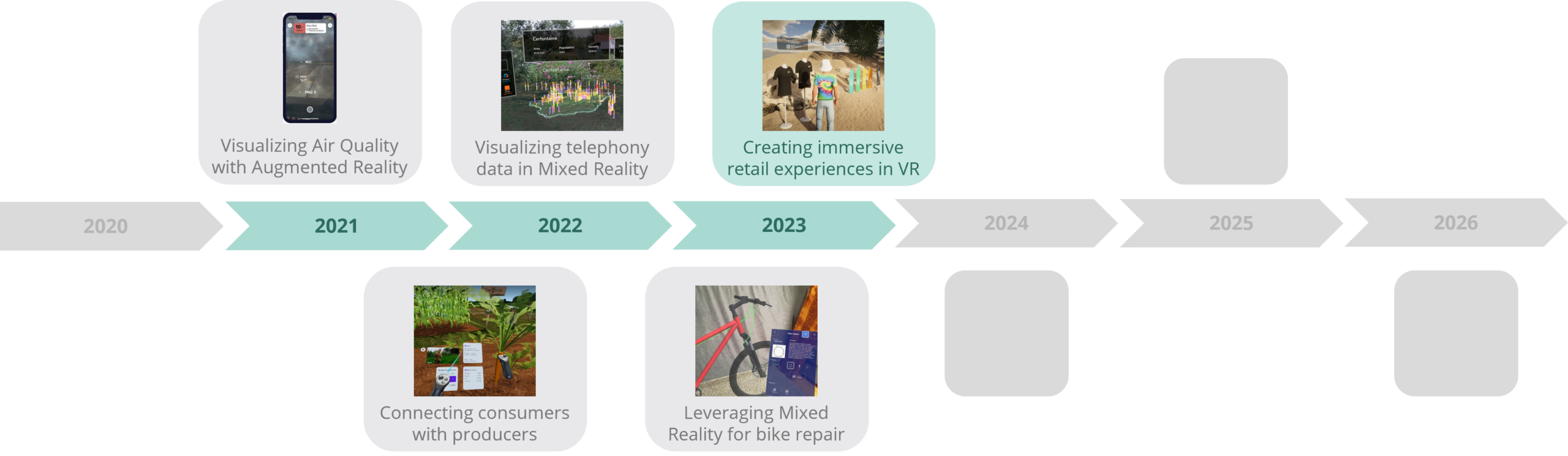
Next projects to be revealed soon…
How a t-shirt request became a beach retail experience
In 2023, another Deloitte member firm asked us to create 3D digital models of products, basically, computer-generated versions that customers could view from all angles, for their immersive retail platform. They wanted branded merchandise: t-shirts, shorts, things with Deloitte logos.
Rather than deliver assets into a generic product showcase, our team recognized something basic: products don’t sell themselves in immersive environments. They need context. They need atmosphere. They need to feel real.
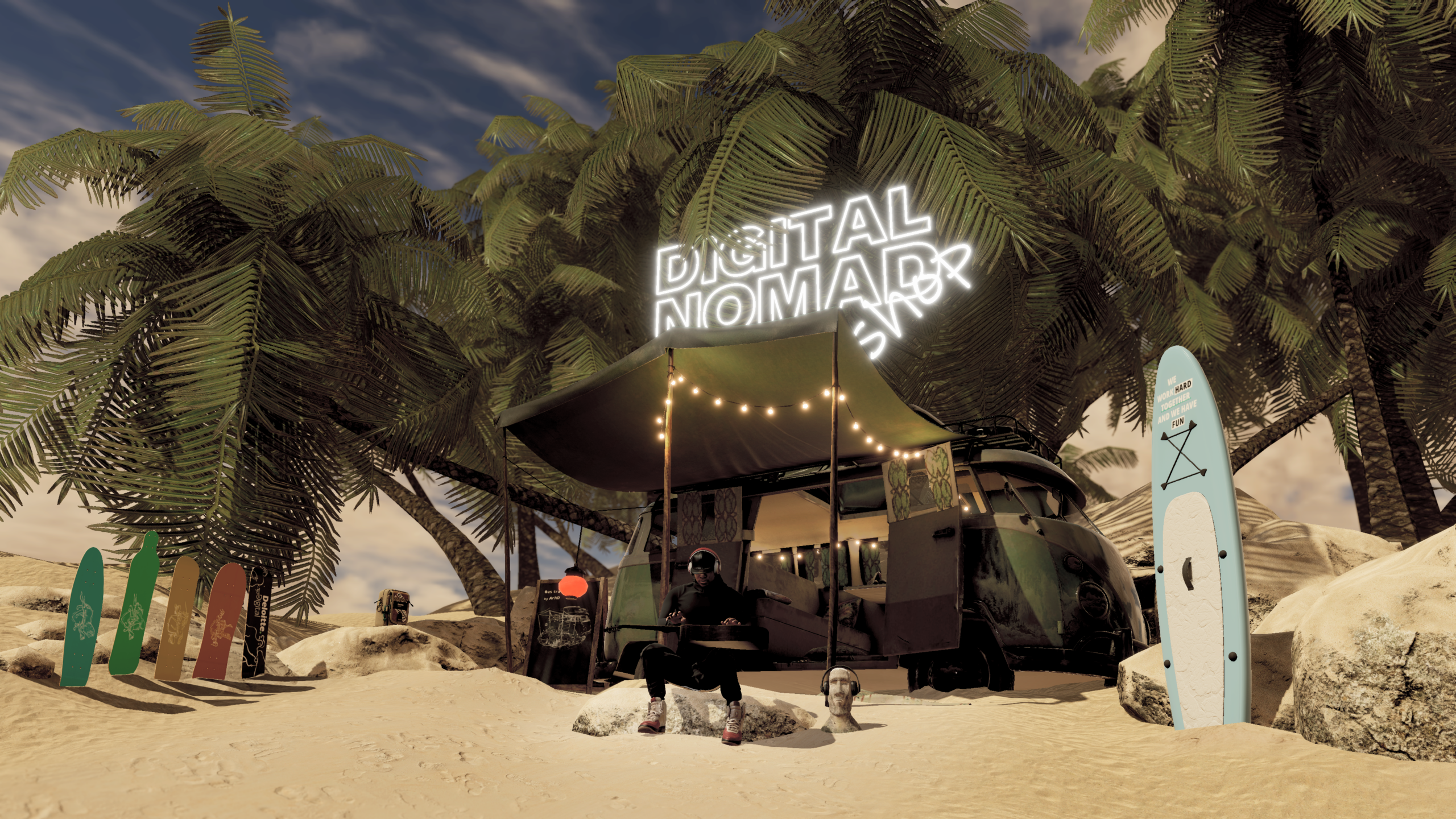
So we expanded the scope. We created not just branded merchandise (surfboards, skateboards, backpacks with striking Deloitte textures), but an entire world to house them. Because when you imagine the future of ecommerce, you may picture it in 3D, but mostly you will realize that you don’t need your shop to look like a physical shop. There are no longer physical constraints and you are free to design the ideal shopping experience: the one that connects emotionnally the audience to the context of use.

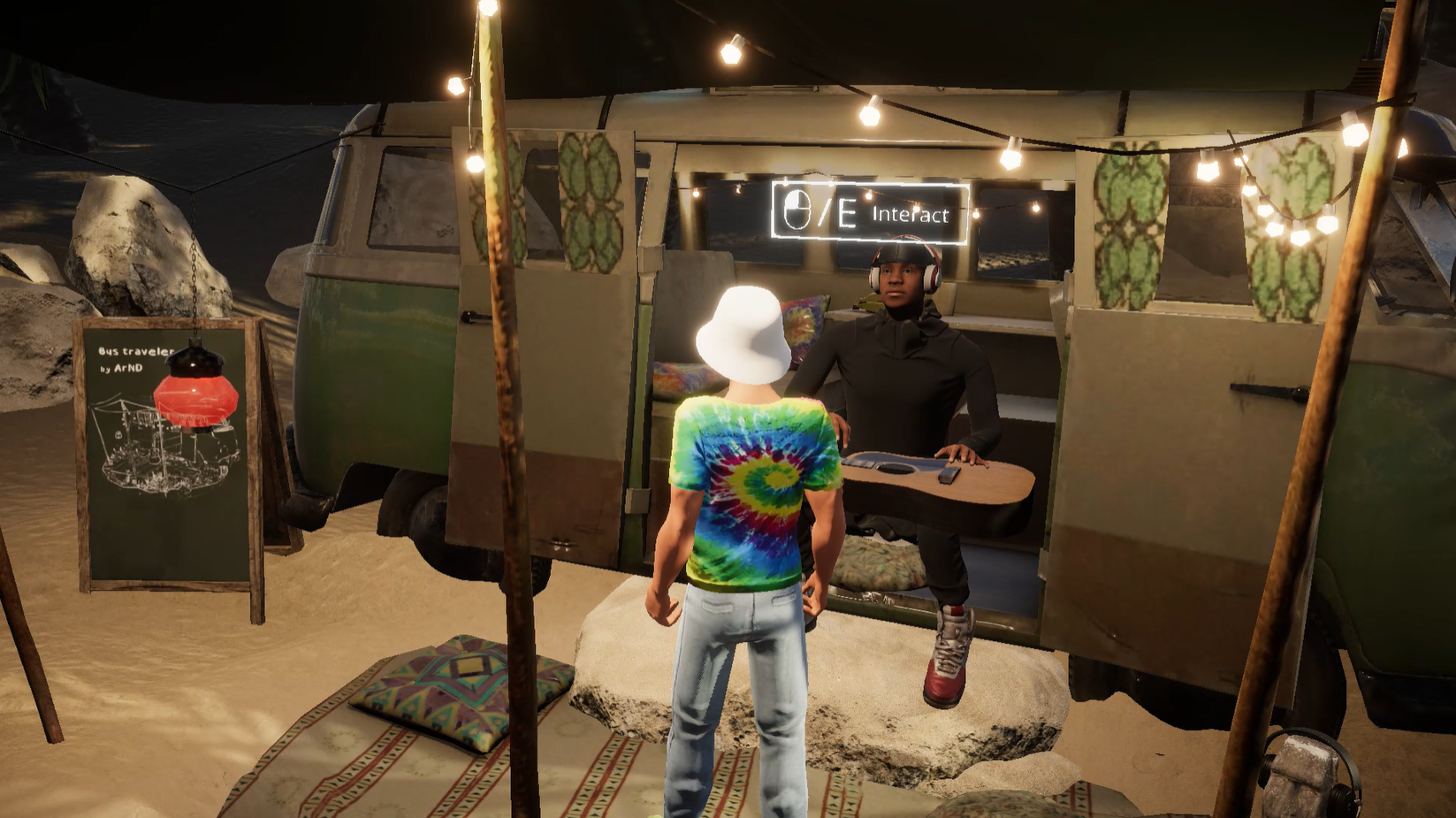
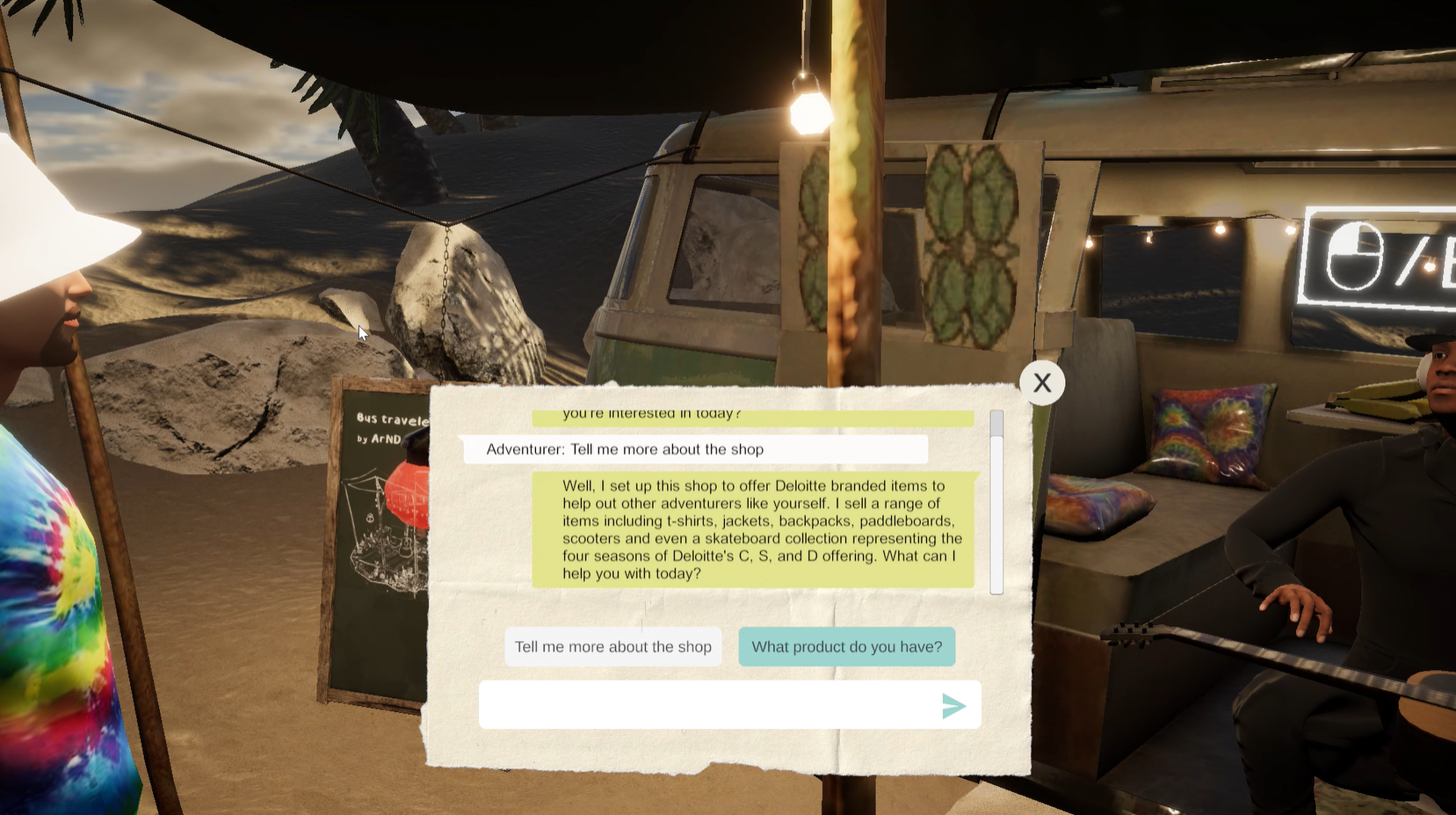
Imagine stepping onto a beach at sunset. A musician sits nearby, playing guitar. You approach his shop, strike up a conversation about the products he’s selling, their materials, how they’re made, their story. You can rotate and zoom in on 3D models of each item to see them from every angle. Then you complete your purchase without leaving the scene.
That was the Nomad Shop.
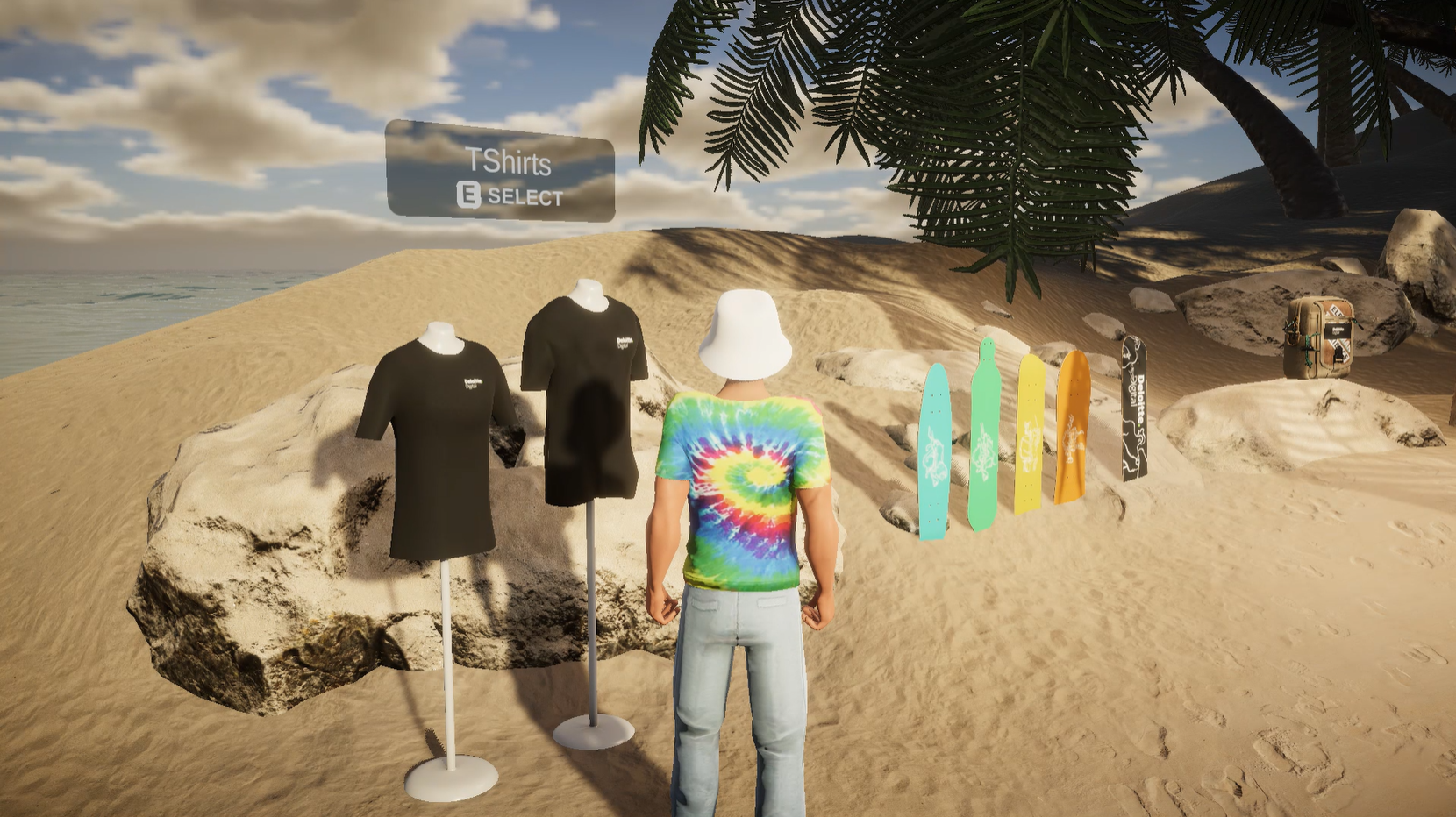
Behind the scenes, we built an artificial intelligence system that could understand what customers asked and respond naturally, like chatting with a real person. This AI-powered attendant provided product information and answered questions. We connected it to Salesforce Commerce Cloud, a payment system that processes purchases behind the scenes. The result was seamless shopping in an immersive setting, you could browse, chat with the attendant, and buy without any awkward steps or leaving the experience. This was a proof of concept showing how retail could engage customers in ways traditional online shopping couldn’t.
Desktop first
We started by building it for desktop computers (not phones or VR headsets). This choice was deliberate.
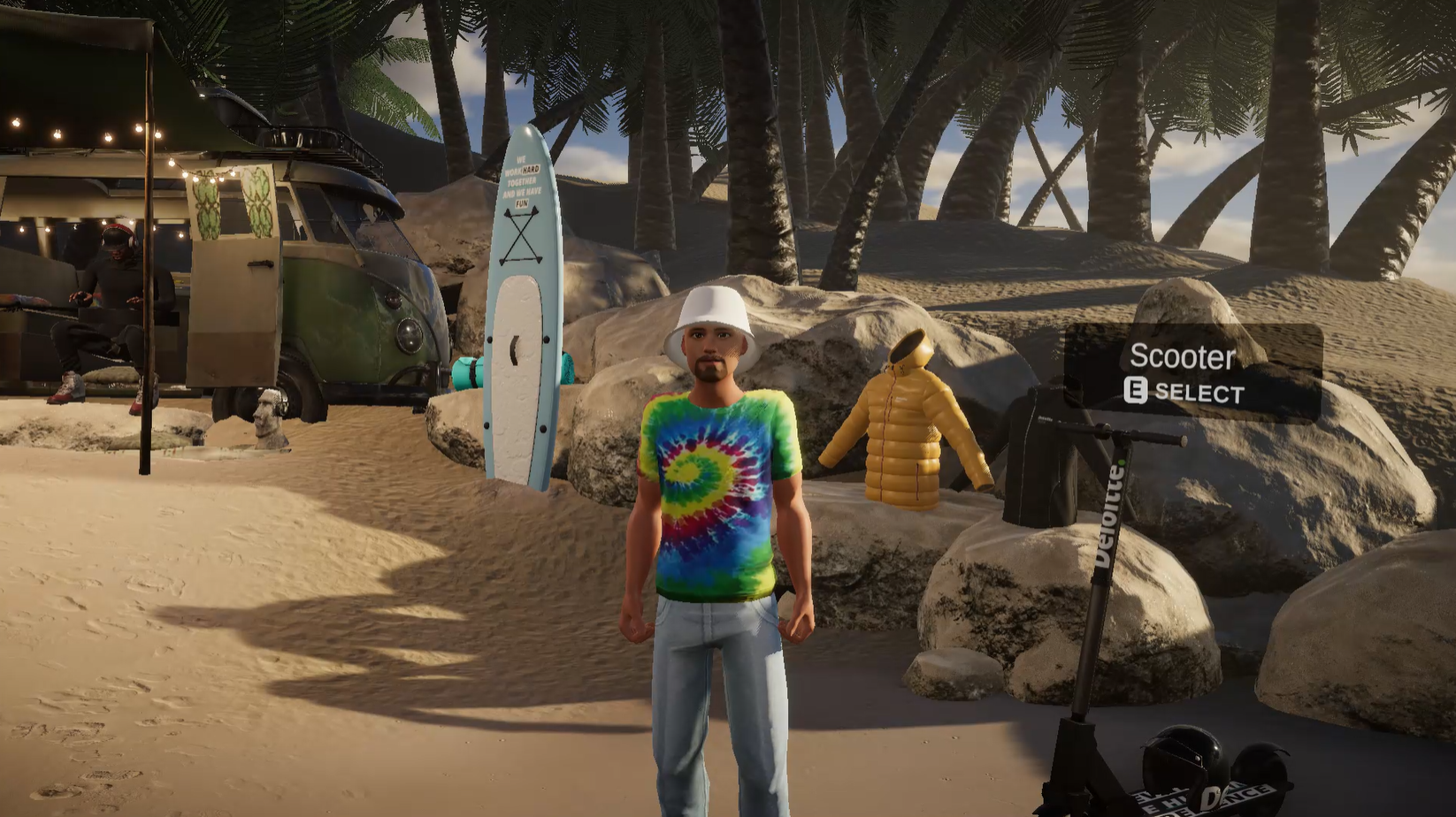
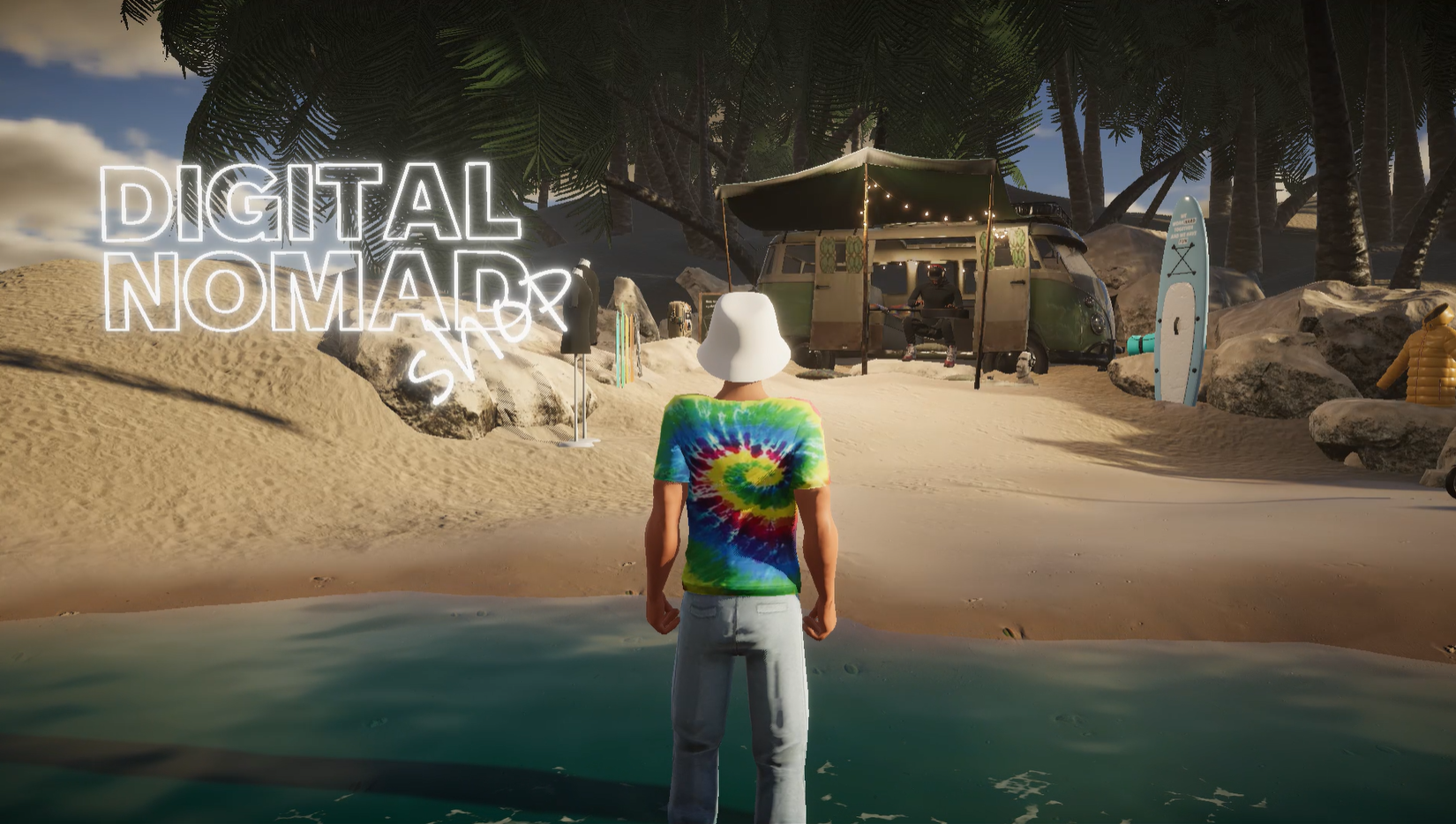
On desktop, we weren’t constrained by mobile hardware. This meant we could create graphics that looked almost photorealistic, with smooth animations and realistic lighting. We achieved this through realistic water with moving waves, sunlight filtering through trees, floating dust particles, and detailed scenery. The result was visually impressive and deeply immersive.
But what made it truly immersive was the small details. Seagulls landed and took flight. Wind moved through vegetation. The shop attendant played guitar and looked up at you as you approached. Dynamic lighting shifted across the scene.
These weren’t optional. They were what made the immersion work.
Virtual Reality
Emboldened by the desktop success, we adapted the experience for virtual reality using a Meta Quest 2 headset connected by a cable to a powerful desktop computer. The cable connection meant the computer could send high-quality graphics to the headset in real time. It allowed the same advanced rendering that made the desktop version work.
Then came the real test: standalone Quest hardware.
The rendering quality dropped significantly. The realistic lighting, floating particles, and detailed water effects that made the desktop version so immersive couldn’t run on the Quest’s built-in processor, it just wasn’t powerful enough. We discovered something important: the gap between graphics quality when the headset is plugged into a powerful computer versus when it runs on its own wasn’t a matter of optimization. It was a fundamental hardware constraint.
No amount of clever engineering could fully overcome it.
Later, we experimented with Apple Vision Pro using the same scene. We incorporated 3D scans of a real skateboard park in Brussels, created by taking hundreds of photos and turning them into a digital model. The spatial computing platform delivered quality between standalone Quest and desktop-connected VR; better than standalone, but not matching the desktop experience.
The photogrammetry work proved valuable. Scanning real-world locations and integrating them into immersive environments added authenticity. Though we had to spend a lot of time cleaning up and optimizing the scans to make them look good, the results justified the effort.
Three years later: what changed, what didn’t
It’s now 2026. Three years have passed since we built the Nomad Shop.
The fundamental hardware limitations remain. Realistic lighting effects (like sunlight streaming through fog) and detailed weather effects still cannot be rendered efficiently on VR headsets that work on their own without being plugged into a computer. The dream of desktop-quality rendering in a lightweight headset hasn’t happened.
But other things have evolved. Unity’s graphics technology, experimental in 2023, is now more stable. We’ve learned faster, more efficient ways to build these experiences. The development tools are better.
If we were to build the Nomad Shop today, we would benefit from more stable tooling and refined practices. But the core insight, that immersion is built through accumulated environmental detail, remains true.
The lasting lesson: boldness pays
The Nomad Shop showed us something important: boldness in creative vision pays off.
What began as a request to model branded merchandise evolved into a statement about the future of retail. Our willingness to do more than originally asked, try bold ideas, and focus on making the experience feel real rather than just getting it done quickly became how we approach subsequent projects.
The project also surfaced a lasting tension in immersive technology: the market is shifting toward lighter, more comfortable devices (like glasses you can wear all day) rather than more powerful headsets. Yet the most compelling immersive experiences still need powerful computers to run them.
Whether future hardware will deliver desktop-quality rendering in standalone form factors is still an open question. But the Nomad Shop stands as evidence that when it does, the possibilities will be extraordinary.
For now, it’s a reminder: in immersive experiences, atmosphere isn’t a luxury. It’s the whole point. This lesson applies beyond retail, it’s why immersive experiences, whether for training, entertainment, or education, succeed when they feel real and engaging.
Clyde Pashley
Lead 3D modeling & Unity development